June 10, 2026
When specifying timber windows, material choice is a fundamental part of the process. From the choice of timber to the type of glazing and finish, each element contributes to the window’s performance, durability and overall lifespan. There is no one right answer when it comes to choosing the right materials for timber windows, as the right solution will depend on the requirements of each project, including performance targets, building type and location, and regulatory constraints. The timber species, as well as the glazing, coating, design, installation and maintenance of the timber windows need to work as a complete window system and should therefore all be considered of equal importance.
Understanding the options available and how they determine the window’s performance is key to making informed decisions. In this blog, we will explore the main material considerations when building your specifications, including timber species, glazing, and coatings, and how these affect long-term performance.
Benefits of Using Timber
Timber offers a range of practical and aesthetic advantages. As a naturally insulating material, it reduces heat transfer and energy loss, improving energy efficiency and helping to lower operational costs, which also contributes to a reduced carbon footprint over the life of a building.
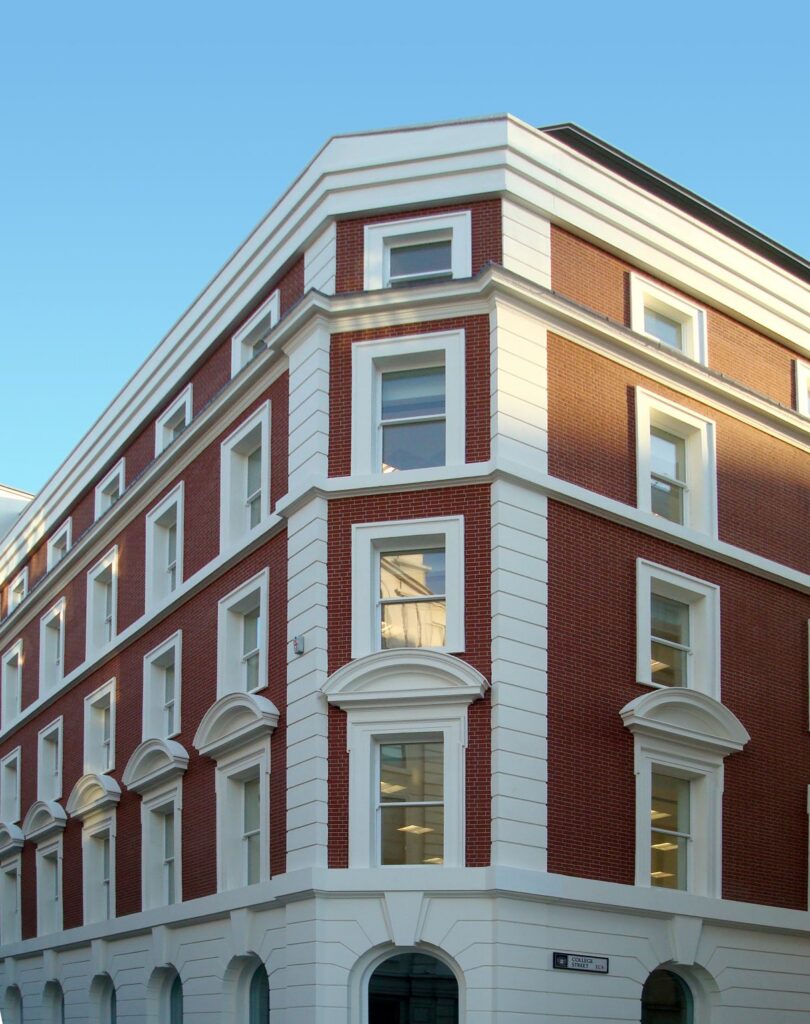
Timber is ideal for heritage and conservation projects as it can be customised to replicate traditional designs while meeting modern requirements for energy performance, acoustic control, security, and fire safety.
In addition to its performance benefits, timber provides a timeless and high-quality appearance that enhances the visual appeal of commercial properties. As a result, timber is often specified for replacement projects where it is important to match existing architecture while upgrading performance. When properly maintained, timber windows can last for decades, reducing the need for frequent repairs or replacement.
Timber Species Options
There are various timber species you can choose from. Each species has different characteristics in terms of durability, appearance, and performance. They typically fall into these categories:
- Softwoods – Engineered European redwood, Douglas Fir
- Hardwoods – Grandis, oak, sapele, modified softwood
At George Barnsdale, we manufacture in four high-performing timber types for our windows: engineered redwood, European oak, Accoya®, and Grandis hardwood.
Engineered Redwood:
Engineered redwood is an attractive, yet durable, material made by laminating high-quality cuts of European redwood to produce a stronger, more weather-resistant material that’s perfect for timber windows. Its dense grain structure makes it robust and suitable for long-term use. It is a great choice if a paint finish is required, as its stability helps extend the life of coatings.
European Oak:
European oak is a sturdy material and is a popular choice for timber windows. This durable hardwood, often used by building professionals, offers high performance and an attractive finish because of its refined grain and yellow-brown colour. Compared to other types of timber, European oak is less prone to expand or contract based on changes in weather and humidity, making it a good choice for changeable climates. However, it does tend to move, and it is important to note that because of its qualities, it can be more costly than other timbers available.
Accoya®:
Accoya® is a modified timber known for its exceptional durability. Through a specialised treatment process, the wood’s structure is enhanced to improve stability and moisture resistance. It performs particularly well with paint coatings, maintaining finishes for extended periods. Its resistance to weathering and saltwater also makes it suitable for demanding environments such as coastal locations, and its natural resistance to decay and pests also makes it a good option for exposed environments.
Grandis Hardwood:
Grandis is a versatile hardwood with a wide variation in colour, ranging from pale tones to deeper reds. Grandis hardwood is perfect for the exterior of a building and is often paired with stains to highlight its natural characteristics rather than painting over the grain.
Engineered Timber:
Most modern timber windows are manufactured using engineered timber. This can either be laminated or finger jointed along the face or laminated but with a clear face (which is typically used for hardwoods when a stain finish is needed). By combining veneers, strands or particles of wood, and playing to the strengths of the new material created, engineered timber makes the most of a natural and sustainable product.
Choosing the Right Glazing
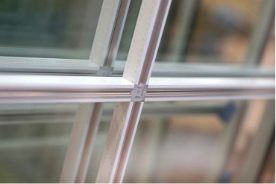
Specifying glazing is a critical component of the process and influences the thermal efficiency, acoustics, and security of a timber window. While some projects – particularly heritage schemes, where replicating original character is often a requirement – may face restrictions, there is often more flexibility than expected, depending on the supplier’s expertise and manufacturing capabilities.
The main glazing options include:
Single glazing: Now used mostly on heritage projects, as it may be the only option if required by regulations to ensure a like-for-like replacement, single glazing offers less thermal and acoustic benefits than other glazing options now available.
Double glazing: A popular choice for most replacements, as it provides a good balance of energy efficiency, cost, and unit thickness.
Triple glazing: With an additional pane and cavity, triple glazing delivers improved thermal and acoustic performance and is typically used in low-energy or Passivhaus applications. However, triple glazing can impact frame design due to the increased weight and depth.
Vacuum glazing: A high-performing alternative that uses a very thin vacuum-sealed cavity between the panes. It offers strong thermal efficiency within a slim profile, making it well-suited to heritage applications where traditional aesthetics must be maintained.
Thermal Performance:
Glazing plays a significant role in achieving U-values and meeting regulatory requirements. High-quality timber frames, paired with double or triple glazing, ensure timber windows significantly reduce heat loss and improve a building’s insulation. While triple glazing provides improved performance, the benefits should be considered alongside potential impacts on design, cost, and installation.
Acoustic Performance:
Glazing plays a key role in reducing external noise, particularly for buildings in urban areas and roadside locations. Glazing is influenced more by the composition of the glazing unit than by the number of panes alone. Laminated glass with acoustic interlayers and varying pane thicknesses can significantly improve noise reduction, which can often be more effective than moving from double to triple glazing.
Safety and Security Performance:
Considering safety and security is essential when specifying glazing, especially for ground-floor windows and accessible locations. Toughened glass is designed to resist impact and break safely into small fragments, which makes it suitable for areas at risk of accidental contact. Whereas laminated glass remains in place if broken, providing enhanced security and making it harder to break. The appropriate specification for safety and security will depend on the level of risk and any project-specific security standards, such as PAS24.
Ultimately, glazing specification should be led by performance requirements rather than the preference of the glazing type alone, as this ensures the window system is aligned with the overall thermal, acoustic, and safety requirements first.
Paint and Stain Options for Timber Windows
Choosing the right finish is one of the final steps in bringing a timber window design together. Whether for a heritage renovation or a contemporary scheme, the finish should complement the building and support the overall design intent.
You can choose from paint or stain options for timber windows. Paint provides a uniform appearance and offers the highest level of protection against weathering and UV exposure. Paint is typically the most durable and is well-suited to exposed elevations or areas where maintenance may be less frequent. Stains are semi-transparent, allowing the natural grain of the timber to remain visible. While visually appealing, they generally provide less protection against UV exposure and may require more frequent maintenance.
However, the timber window finish is not purely aesthetic; it also plays a vital role in durability. High-quality timber windows use factory-applied, multi-layer coating systems to provide consistent protection across all surfaces, particularly at joints and end grain. Modern coatings are typically microporous, allowing moisture to escape while resisting water ingress. This helps reduce the risk of cracking, peeling and premature failure, while UV resistance is especially important on exposed elevations.
Maintenance requirements for your chosen finish will vary depending on environmental exposure and specification, but well-maintained timber windows can last for 60 years or more, often requiring only minor touch-ups over time. Ensuring compatibility between the chosen timber and finish is essential for achieving long-term performance.
Choosing the Right Materials for your Project
Selecting the right materials depends on several factors, including performance targets, regulatory compliance, and the character of the building.
For new-build and contemporary projects, specification is typically driven by energy efficiency, durability and low maintenance. This might mean that double or triple glazing with enhanced thermal coatings is often favoured, alongside factory-applied paint systems designed to provide long-term protection.
On heritage and conservation projects, the approach is often more balanced, with the main objective usually being to maintain the building’s original appearance. This can influence decisions around glazing thickness, sightlines, and finishes, with solutions designed to replicate traditional aesthetics while improving performance where possible.
Compliance is another key consideration across all projects. Building regulations may dictate minimum performance standards for thermal efficiency, safety glazing, and ventilation, all of which need to be addressed at specification stage. As a result, material choices should always be considered as part of a complete window system, rather than in isolation.
Ultimately, there is no one-size-fits-all solution when it comes to specifying materials. The most effective specifications balance performance, aesthetics, and materials, ensuring the windows not only meet regulatory requirements but also complement the building, whilst performing to a high standard and offering long life with low maintenance, making them more cost-effective over time.
Getting these decisions right early in the process is key. At George Barnsdale, we support specifiers from the outset, providing expert guidance to help refine material choices and ensure your timber window specification is aligned with project requirements. We can also provide detailed NBS specifications, CAD drawings, and technical specification documents, making it easier to integrate high-performance timber windows into your wider project documentation with confidence.
Read our blogs on performance and aesthetic specification factors to consider when specifying timber windows here:
Performance factors to consider when specifying timber windows.
Maintaining architectural integrity when specifying timber windows.